-->

July 5, 2012

Panama: Portobelo & San Lorenzo

Day 4 Colon Provence

Start the Trans-isthmian day by exploring the Gatun Locks. Unlike the Miraflores locks, these are less visited by tourists, and you will easily be able to have a front-row view of the massive tankers moving down the locks. It is a completely different experience than the Miraflores locks and one I much preferred. 


 Portobelo is a mysterious location with a past rich with Spanish gold, vengeful pirates, and British overtakings. Located in Colon Province, Portobelo is in the northern part of the isthmus. Like many other great trading posts, it has a deep natural harbor, the necessary characteristic for a town to store and guard Spanish treasure.


The gold that found its way to the safety of the many Spanish colonial fortifications in Portobelo and the nearby Fort San Lorenzo came in great quantities from Peru, Pizarro’s land of conquest. 


The gold was too strong a pull, and the English continually rampaged the fortresses, most famously by Francis Drake, who set fire to San Lorenzo in 1596.  Portobelo itself was most brutally attached by Henry Morgan, who, according to a Dutch historian, killed or wounded basically the entire city. Fort San Lorenzo and the Spanish fortifications were declared a UNESCO World Heritage Site. in 1980. 


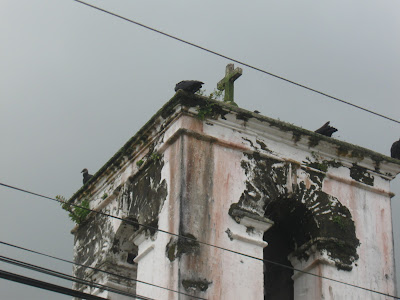
With great views of the Chagres River and the mossed-over forts, plan to spend time at both of these great sites to soak in the intensive colonial significance this stretch of coast had.

This side of the country is vastly different from the southern coast, home to the booming Panama City. Here on the northern side, things seem to be crumbling, much like the forts. However, within this tattered landscape, you find incredible cultural treasures. 


One that must be mentioned is the adored “Black Christ” housed in the San Felipe church. The wood came from Spain and is over 300 hundred years old. While the effigy was not originally black, smoke from burning incense and other air contaminates caused the carving to become dark brown. Not only is the “Black Christ” a significant symbol for Panama a yearly festival, on October 21st, draws thousands of visitors to the church. After walking miles from as far away as Panama City, about 50 miles, most pilgrims crawl on their hands and knees the last mile to the church. 


Walking into the little church and past the tiny, weathered houses, you will not feel like a band of tourists filing into yet another church to take a few snapshots and move on. You are in the community of a people with a deep reverence for this place. It is less of a tourist place and more of an opportunity to put the camera down and walk in with respectful esteem.


If you have the option, riding the trans-isthmian train back to the other side of the isthmus is necessary. The train allows you to see Lake Gatun (a body of water between the locks) and enjoy a relaxing ride back home after a very long day.


Pin It

July 1, 2012

Being a Geographer: you're born with it


As I set out to get my mind focused on applying for PhD programs, I revisited the statement of intent I submitted for graduate school at California State University, Long Beach. Reading through it, I laugh at the eagerness and clear enthusiasm for geography I had then and still do. Finding a field you can throw your entire self into and still want to learn more is a blessing. This is what academic excitement is from a college undergrad: 

(partial) Statement of Intent: CSULB  
2008/9

                As a result of grade school geography sadly being compressed into social studies, history became my favorite subject. However, the allure of great empires and trade routes kept me drawn to maps; an antiqued map of the Roman Empire adorned my bedroom wall by seventh grade.   Upon entering Texas Christian University, I reluctantly followed a conformist path, choosing an Advertising/Public Relations major, and then switched to Communications. Until I discovered academic geography, misery and disappointment plagued my coursework. Fortunately, the day I took my seat in World Regional Geography, my professor started the class with her story of stumbling upon her geographic destiny.  Within the first three minutes, I was overwhelmed with memories, categorizing myself alongside my professor as a born geographer. Daydreaming, I remembered myself in grade school, constantly sketching world maps in the margins of my notes and always bent over a National Geographic at my grandma’s house. Spinning back to the reality of the classroom, I had heard exactly what I needed to start climbing my personal Mt. Everest. I realized it was possible to major and pursue a career in geography. As a geography major, I completely turned my academic performance around from doing poorly in previous majors to achieving straight A grades in geography.

                The Geography of Western Europe course refined my admiration for history and culture into a geographic framework.  We studied the “continental architecture” of Europe, and I began to understand how physical geography is the stage upon which history is set. Exploring the relationships between peoples crammed into their European homelands was fascinating.  The relentless unfolding of centrifugal and centripetal forces on the European continent opened the door to my interest in multidisciplinary studies for both historical and cultural geography and their relationships to physical geography. Two other courses, the Geography of Latin America and Cultural Geography, helped quench my thirst for case studies that intertwined history, culture, and physical geography. Now, I have even more questions and seek more knowledge and explanations.

                TCU has provided me with a well-balanced undergraduate course of study. In addition to the above courses, I have taken GIS, Applied Geography, and Urban Geography. As a result, I am eager to expand my knowledge without the pressures of one specific specialization. New topics tempt my curiosity every day. I can imagine myself researching site and situation characteristics of cities such as Troy or studying the diffusion of globalization into traditional indigenous peoples upriver from Manaus in the Amazon. All the unending possibilities in between fascinate my inner geographer.  A thesis topic relating to the preservation and assimilation of culture has been a constant consideration after hearing multiple presentations of this theme at the American Association of Geographers in 2008. I have acquired a lifelong appreciation for geography from the Geography Department at TCU. I cannot fathom pausing my education now, but I look forward to continuing my education at the graduate level.

            I attended the AAG meeting in Boston last year. Being surrounded by many people who understand why geography matters enabled me to have the most insightful and educated discussions of my life. That experience was the final push that cleared my thoughts about the near future. Undoubtedly, I would go to graduate school in geography. I realized that the possibilities for geographic research are endless and that any interest can be studied from a geographic perspective, which was thrilling. I will be co-presenting a poster paper at the AAG in Las Vegas.  This is the next opportunity to further my connections with geographers and extend my experience in research and presentation.  

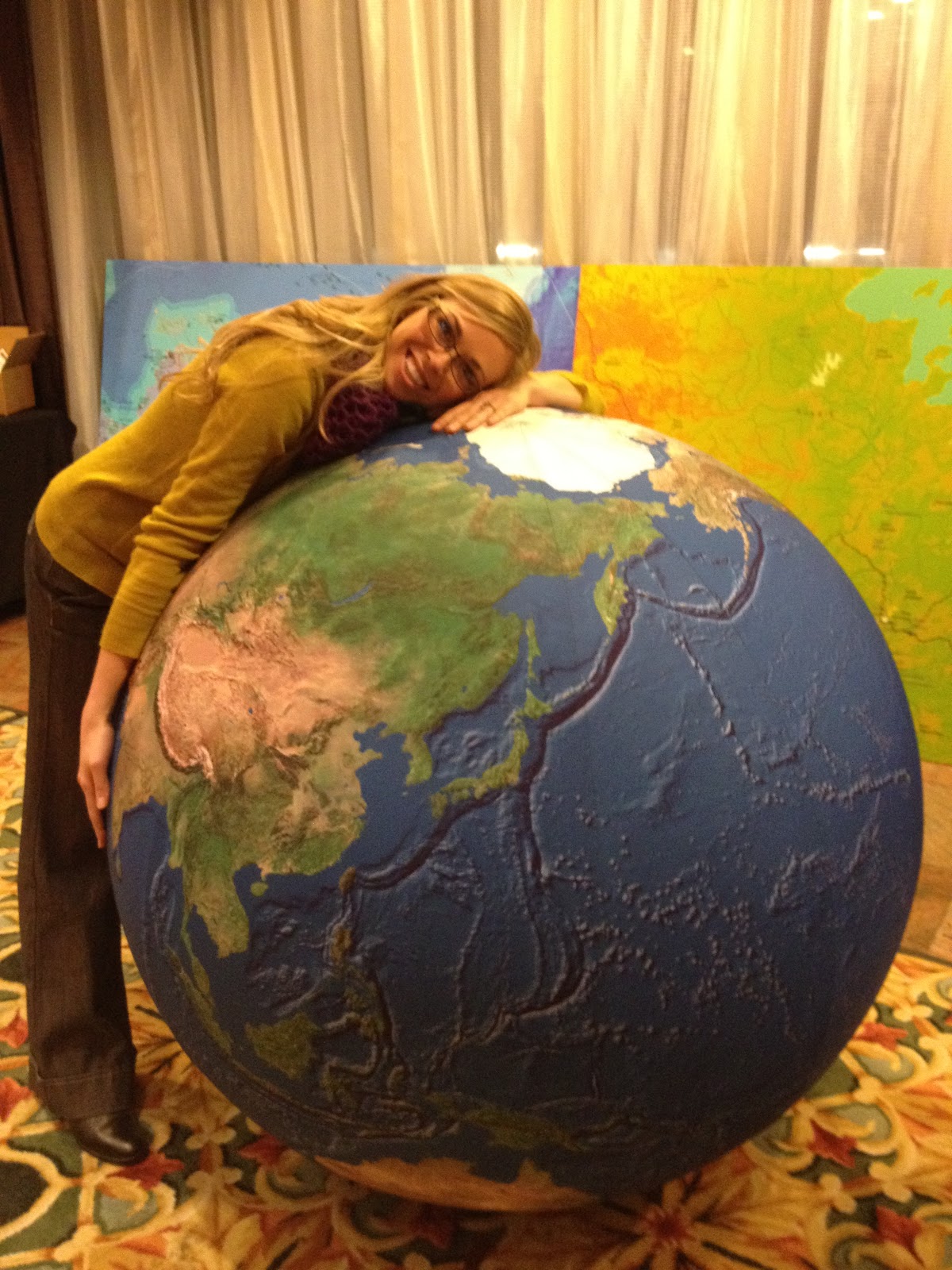
            As a senior geography major at TCU, all I see when I look at a globe is how many regions and cultures I have yet to study.  I wish to expand my love of cultural and historical geography into more focused and advanced geographic studies. Graduate school will provide new challenges and opportunities and force me to open new roadways of intellectual curiosity at the intersection of culture, environment, history, and place. 


Pin It

June 25, 2012

Time to Adapt! SEO & Social Media


For the last year, I have taken over as CSO for PartingOut.com. At that time, the social media network for this website had grown exponentially from zero to too many to list. From a geography professor to a full-blown SEO and Social Media campaign organizer and manager, I have adapted to the fast-moving job of updating and managing over 15 social media outlets for the online start-up. The most important are Twitter, Facebook, Instagram, Pinterest, Google+, Flicker, MySpace, and the office blog on WordPress.  I will share the experience of doing these two jobs (SEO and Social Media) in other posts, but to set the record straight: What is PartingOut.com anyways?

PartingOut.com is a new virtual online salvage yard created to bring used auto parts buyers and sellers to one venue.  This project, started by a salvage yard owner five years ago, is founded on revolutionary tools to optimize the used auto parts industry. There is a huge demand for used auto parts that is grossly under-serviced. PartingOut.com satisfies that demand by taking the local auto recycler and expanding its inventory to a worldwide audience.

On PartingOut.com, parts typically not considered when buying salvage are sold without the hassle or attention that would generally outweigh their value. For example, by listing the major parts of a vehicle (motor, transmission, etc.), sellers have opened the entire vehicle up for the market (floor mats, sun visor, console, etc.) due to the image-based platform of PartingOut.com. This is possible through the Buyer Listed Part tool. When a buyer sees a part they need on a vehicle that is not listed, they can create a Buyer Listed Part. The buyer describes the conditions and amount willing to pay, presenting a qualified offer to the seller. That once obsolete part has just sold itself.

“I sold a sun visor for $50.00. I would never have spent the money or time to list that part on any other website. This customer saw the visor in the picture and created a Buyer Listed Part. Then I received an instant alert, and a deal was made: that’s what PartingOut.com is all about:” Kevin Fullerton, CEO. This is one of the revolutionary tools that will change how used auto parts are found, sold, bought, and recycled by creating a market for every part.

The fundamental characteristic that elevates PartingOut.com above other online used parts websites is its visual-based platform. PartingOut.com is based on marketing an entire vehicle on a visual basis (not interchange) and, possibly most importantly, bringing the real-life experiences of walking through a salvage yard, seeing the part you need, and making a deal, but online.

If you think this rocks, vote for PartingOut on MissionSmallBusiness.com to help us compete for a Mission: Small Business Grant! Click "SUPPORT" and then easy log in with Facebook, search PartingOut.com and vote! 


Pin It

June 24, 2012

Wedding Day Make-Up Musts!


I completely understood when Kate Middleton mentioned she would be doing her own makeup for her wedding because she wanted Will to recognize her. I also chose to do my own makeup on my wedding day, and a few products and tips got me through the photos, ceremony, and reception without the fear of smudges or vanishing acts. These tips and products are focused on every bride’s most important makeup requirement: long wear!

Preparation is Key!  

I love having long, full lashes, and for several months before the wedding, I started using LiLash. It is truly remarkable; you will wake up one day, and your eyelashes will look like beautiful Mini Mouse lashes. Last summer I was sucked into getting eyelash extension, and I can tell you, this is a much better result for your wallet and your eyelashes. The lash extensions are expensive, take at least an hour to fill, and if you decide to stop getting them, you have a period when you have to let your real lashes grow back (for me, this was brutal).  On the other hand, LiLash is at home, takes no time, and will give you great lashes for a year at three weeks with lash extensions. Start at least four months before your wedding! 

The one product I cannot live without is my eyelash curler. Unfortunately, my natural lashes have zero curls and actually point downward. I started using an eyelash curler at a very early age, but the key to getting it to stay is to heat it up with the blow dryer for 20 seconds. This is a fairly well-known tip, but the next step is crucial to getting those long lashes to stay in place, especially on your wedding day, to prevent smudging – waterproof mascara. I always put on two quick coats of waterproof mascara right after I curl my eyelashes to ensure they stay curled and look fabulous all day. I prefer Merle Normal waterproof mascara; I can’t find one I like better. Do not miss this step on your special day!

Lid Prep

Most people don’t do their eyelash rituals until after they apply their eyeshadow, but I do the steps previously mentioned (curl and then apply waterproof mascara) before I do anything on my eyelids. Then, I wipe on a crème lip prep from Clinique (lid smoothie) to keep my eyeshadow in place all day. Without this step, I get creases of shadow that ruin the whole effect. 

This crème also helps me in my next and somewhat usual makeup application. I do not use eye shadow brushes. Never have. I've always felt like my friends are continually buying eye shadow. On the other hand, I only buy eye shadow every couple of years, seriously! I believe it's because using my finger tip I get twice the pigment out of the same amount of eye shadow others apply using a brush. I am always frustrated with the lack of placement, shadow residue on my nose and cheeks, and the amount of re-application needed when I try to fiddle with an eye shadow brush. Try it out, but the crème is a must because it makes the shadow smooth and easy to blend with my finger.

Long Wear Liner

Once my shadow is in place, I reach for my favorite eyeliner of all time: Stila Stay all day, waterproof liquid eyeliner! Do not worry about your makeup running; it is priceless if you are a presumed teary-eyed bride. I cried down the aisle and never once worried if my mascara or liner was running. This liquid liner is just like a pen with a long felt tip, making it the perfect tool for all the women who favor the wingtip/cat eye look, like me. Even if that is not your style, you will love the quick whip across the top of the lid that will not budge the rest of the day.

I get a little picky about my eyeliner process, and it takes three different types of application for me to be happy. I start with the Stila liner on my top lids, coming to a small wing. I then applied black powder with a brush to the inside of the top and bottom lids. Taking the remaining residue of black powder, I smudge my bottom lashes and up into my wing tips for a smoky/less stark line.

After my entire eye makeup is done, I apply the final coats of lengthening mascara with care to avoid getting it on my lids, and it's done! No runs or smudges here!


Pin It

June 15, 2012

Bring Bridal Portraits to Life with a Punch of Color!

There are trends for engagement, wedding, and, of course, bridal portraits that every bride stores away in her “wedding notebook.” For the past few seasons, incorporating unique backdrops like untraveled highways and salvage yards has replaced the typical Victorian staircase.

I took these all into consideration when planning my bridal session. One thing was certain: I was getting married outside, and my bridals would only fit outside where my heart belonged. I did land on one trend that I knew I had to have… “vintage sofa in a field.” I had seen this several times but wasn't sure how you were supposed to get your hands on a gorgeous antique sofa covered in fuchsia velvet, like the particular picture that gave me the inspiration. After showing this picture to my mom and discussing the logistics, she set out: garage sales, estate sales, and auctions.

Luckily, she found a tremendous antique sofa at an estate sale for literally a fraction of a fraction of what it would cost in a store. The only issue was it was covered in an old flower pattern that would make your great-grandmother Ruby look young.  So, we went to the local hardware store and bought bright yellow wall paint. Yes, wall paint. After three coats, the pattern underneath was barely noticeable, and we had the most incredible statement sofa in Texas.


The decision to go with bright yellow initially was my desire to go with a pea green. Once we were standing in front of the wall of paint strips, however, I decided to just go for it and make that sofa spring out of the field it would soon be resting in. The result was amazing, and I am so glad I went for that bright punch of color! So go bold when planning your bridals, and start now!


We started the sofa expedition nine months before the wedding. Planning is a crucial element if you want to have bridals with personality—mothers, however, are the key ingredient. 


Pin It

May 14, 2012

Interview: DCC Final Auditions


Just know... 
You never get the questions you are prepared for. If you are a Cowboys fact wiz, you will slowly make a fist under the table as everyone else in the room is quizzed on Cowboy trivia, and they will then turn to you and ask you who “you most admire.” Instead of knowing everything you think the panel might ask you, focus on knowing why you are there. What makes you want to be a DCC?

You are there to sell, You! So ask yourself

1) What was the turning point in your decision to audition?
2) What would being a part of the DCC do for your life? Would it enhance your performance and resume? Would it bring you camaraderie?
3) What is the number one thing the DCC does that you most admire or aspire to do? Game performances? USO Tours? Appearances?
4) If you knew you could not fail… what would you aspire to be?
5) What is your life’s passion?

Answer those questions, and it will give you fire and enthusiasm to answer whatever question is thrown at you.

Besides knowing who you are, there are a few topics I would be well versed in.  I am a teacher who doesn’t believe in giving the answer up, so here is your homework.

1) What is Charlotte’s position?
2) Who is the President, Vice President, Secretary of State, and TX Governor?
3) What is happening in Syria and North Korea? The DCC visits Korea on USO tours frequently, so be aware of what's going on there! 
4) What significant event happened this year involving the EX Liberian President, Taylor?
5) And, of course, Cowboys Musts: coach, new draft picks, your favorite player (and a good reason!), what years did the Cowboys win the Super Bowl, and how many Super Bowl appearances have they made?  


Pin It

April 18, 2012

Panama: Embera Indigenous village


Day 3 Jungle Expedition 

One of the greatest outdoor adventures of my life happened unexpectedly on a simple jungle hike through the Panamanian Jungle led by a small, muscular indigenous guide in a bright orange beaded loincloth. Without question, a must to fully experience Panama is a trip to the Embera Indigenous village. This will be an all-day excursion, including being wet regardless of cloud cover. I recommend bringing a rain jacket, wearing slick shorts (not something that will soak up water), good tennis shoes, or hiking boots.

Why all of this? How else do you get to an indigenous village hidden by the rainforest through dug-out canoes and jungle trails? When you make it to the pickup site, you will be greeted by big smiles, slightly distracting from the previously mentioned scant, elaborately beaded loincloths worn by your tour guides. Most young men are eager to speak to guests and know enough Spanish to get by. Even the less fortunate, non-Spanish speaking guests, like myself, can communicate with a few Spanish words mixed with charades.


If you have not felt small before, being tucked into a dug-out canon, slowly winding through the ever-curving meanders of the Chagres River, will ensure that experience. The jungle seems untamed from the boat and dense enough to hide anything beyond the wall of green. There is truly nothing like being in a wild jungle. It takes your breath away to see nature so enveloped, with so many plants and animals coexisting. 


 The highlight before arriving at the village is a detour to visit roaring waterfalls. The journey there is what calls for those hiking boots; let’s just say this is the road less traveled. While the majority of the path is clear and continually walked, you may find yourself ribcage deep in a torrent of water as you and the rest of your party form human chains across the turbulent river. This was the case for my TCU group last fall. While on the “bumpy” but clear path, we had to travel over a shallow part of the river to get to the other bolder-less side. After that, everything changed. We pushed forward until we reached the waterfalls, treading through hip-deep water here and there as we held on or reached out for one another. We knew it was slightly dangerous, but it didn’t seem like anything we could not handle.


After taking a few quick pictures to document our grand achievement in front of the waterfalls, heading back, we realized the path we had traveled was no longer an option. The situation had dramatically changed, and we were unsure we could “handle it.” As we pushed forward, the water behind us continued to rise. As we looked back toward our canons, an hour or more hike, we found ourselves threatened by a flash flood. Two more students and I searched with our guide for a “graspable way out.” After 20 minutes or so of searching and strategizing, we slowly sent out the strongest male students into the river as anchors as the rest (and the majority) of the female students were sent across and “caught” and then “thrown” until they reached the guide on the other side and pushed up onto the bank. This was repeated several times at different crossing points. At one time or another, everyone in the party was swept under by the current and spit up downstream. Many cameras were lost, but everyone was fine. Thankfully, my long, gangly arms gave my camera just enough length to stay above water as my feet were swept away and my head went under... a time or two.      


Of course, your jungle adventure to these falls is far more likely to be absent of flash floods and human bridges, but it will still be an adventure. The waterfalls are incredible. These are the types of places you can feel gleeful about visiting because of their rareness and beauty.

Back into the boats, hopeful of no rain but sunny skies, relax, and you are about to have the best fish of your life. Of course, I am talking about corvine (sea bass). When you climb up the wooden staircase towards the village, you will see most of the “natural, typical” livelihoods of these people cleaning their homes, chatting outside doorways, etc. Once you reach the inner part of the village, you are being entertained and, therefore, likely seeing a wishful rendition of their lives. Before “the show’ begins, you will be treated to a traditional meal. From Panama City to the Embera Village, that means fried corvine and fried plantains. I consumed this meal at least once daily on this trip, but both dishes in this village seemed like a four-star dinner. It was the best fish I may have ever eaten (with my hands) and undoubtedly the best plantains I had ever eaten. It is all served on a wooden plate after watching the cooks quickly fry it.

With a full stomach, the introduction of the tribe can now begin. For the rest of the afternoon the chief, his/her family, and other important elders will greet you and fill your heads with stories. Do not be afraid to ask them questions, with three geography professors in their village they found themselves talking about everything from acculturation with the city dwellers, youth issues dealing with globalization, and even gossip about the resident Peace Corp representative teaching the village school.

There are numerous souvenirs hand-made by the women for sale. They are displayed in booths like an American antique shop, with each stall having similar but unique gifts. The day ends with dances performed by the youth, and then, if you are brave enough, you are welcome to join in the fun! Its vacation! Don’t hold back. While this may not have been the most authentic routine for these people, at some point, you have to let go of your conflicted globalization banters in your head and simply know that today, for these types of places to stay connected to their traditions is through some kind of tourism to economically support them. I think this group of people seems to be dealing and balancing their traditional lives with outside interaction very well.


When the boat arrives back at your bus, you will feel like you have been on vacation for a week. The day is filled with so many memories for me, I honestly can’t wait tell I have a family of my own and can (hopefully) take them on this journey. 


Pin It

April 16, 2012

I want my students to THINK!


Making Big Connections: Geography Assignment 
 
As a geographer, I see how everything connects. From the way the natural landscape molds the way we live to the way anti-immigrant policies in France impact the EURO, I seek to understand the networks. This is my number one objective while teaching World Regional Geography: for students to critically think about what they learn, read, and hear and ask themselves how it connects to other phenomena


I strive to achieve this not only by continually keeping discussions open about the topics we cover in class and asking, “What will the result be,” but also with the three mandatory assignments for the semester. I am continually collecting academic articles, editorial stories, and news stories about current topics in the world regions we cover in my class. Examples include “The Flight of Japan’s Immigrants” from Bloomberg BusinessWeek April 25-May 1, 2011; “Investigations: Africa’s Elephants” from The Informer 2011; and “Is the EU taking its over-fishing Habits to West African Waters” by John Vidal in The Guardian.  I have at least 11 articles for each of the nine world regions I teach. The AAG Smart Brief is a fantastic resource for these types of articles.

Students can choose to pick three articles to write individual responses to. The three responses must be from different regions, and each region’s response due date corresponds with the second day of the lecture related to that region. This is in hopes that students will share what they read with the class and relate it to the class material. Essentially, three times in the semester, every student will have something concrete and interesting to share and relate to the class that only one or two other students will also know (because of the multiple due dates and a large variety of articles).

But the response itself is where I am pushing students to do something they rarely do these days in college, much less in the liberal arts: critical thinking. Summarizing and interpretation are the typical requests for these types of assignments, but not here. I give students the benefit of the doubt that they can summarize a 1000-word article. What I do not expect them to do, at first, is to “find” a multidisciplinary interrelationship. What in the world do I mean by that? 


An example is probably best here; after reading the article “The Year of the Dragon” in Bloomberg BusinessWeek that does not mention migration, urban change, or cultural tensions, this student wrote this paragraph showing the reader a multidisciplinary interrelationship between the article material and the ethnic tensions in China learned about in class. 
 
 “As family size in China increases, due to the Year of the Dragon, parents will predictably seek more income and larger homes.  At some point, affordable urban housing will become scarcer and more expensive because of the increase in demand. The Year of the Dragon will contribute to China’s already overly crowded eastern cities, which could lead to a steady urban-to-rural migration of middle and upper-income families. This would contrast with the massive rural-to-urban migration by poor Chinese.  Specifically, people might move to the western part of China, which is less crowded and developed, resembling a “go west” mentality in the US. One of the negative outcomes of this change in migration could be an increase in cultural problems with ethnic minorities, such as tensions between Han Chinese and both the Tibetans and Muslims in the western part of China. This may lead to a major conflict between China's coastal and western parts.”


The actual core directions are: Examine at least one multidisciplinary interrelationship (political, economic, geopolitical, military, social, ethnic, etc.) that relates to the article. For example, an essay on Russian weapons sales to Iran can consider the interrelationships from (1) its geopolitical consequences to the US and/or (2) the benefits to the Russian economy (explain to me how this relates to different countries/regions of the world). This information is not in the article, after reading the article I want you to ask yourself, “what does that mean for the people, cities, region, neighborhood, or country in the article or those not mentioned?” Once you latch on to an idea of what will change on the ground due to what you just read, ask yourself more detailed (small-scale) questions. For example, how will this affect family size, cultural exchange, globalization, tourism, food prices, migration patterns, acculturation, homogenized markets,  local or regional health, city layouts, population patterns, and so on? You will be on the right track when you start to answer these questions. Show me you can think geographically.

For the first time in the semester, when my Dropbox fills with student responses on various topics with different connections, I prepare for a long week. This type of critical thinking activity asks students to sit back and take the time to explore with their minds what the implications of what they just learned might be “on the ground” is, unfortunately, minuscule in their college careers. For their first of the three responses, students almost always turn in a summary with a few predictions without any strong supportive reason; thus, I give excessive feedback and direction. I truly want students to “get it!” When I have a student make a big connection, and I can read their enthusiasm for their accomplishment, I am satisfied. By the third response, 90% of my students had knocked me off my socks! I think, “Wow, that is cool, that is absolutely possible!” Nothing is more exciting than a student unleashing their own exploratory thought process and coming up with something new and exciting.

I somewhat dread grading/commenting on the 1st responses, but I get giddy to read their 3rd responses! 


Check out that divergent boundary! 


Pin It

April 15, 2012

DCC Preliminaries Audition Advice


How to Arrive at Cowboys Stadium

The weather is unpredictable, but spring in Texas means moist mornings. The last thing you want to do is stand in line for over two hours in humid air and let your hair-sprayed hair; you woke up two hours early to curl and fall. I suggest arriving with your full makeup on and your hair nicely straightened or blow-dried. I say that because this is the only day you do not need to be “practicing” a routine, either DCC choreography or your own solo, once you get inside Texas Stadium. Therefore, you will have at least an hour of time to do nothing except "fluff & puff," i.e., curl your hair and even have help from all the other hopefuls. This means your hair will not look like it has too much product from having to do it twice. Many also arrive in curlers and don't take their hair down until inside, which is another way of avoiding doing it twice.


One way to get that perfect Texas Hair is to tease your roots (don’t overdo it) and then curl the bottoms. You want to curl AWAY from your face; this will give your hair lightness and help if stay curled throughout the day. Since I am not a talented teaser, my favorite product is the new hair-body boosting powder by Aveda. I lift an inch worth of hair from my natural part on both sides and sprinkle a line of the powder evenly. Then, gently run your fingers front to back to activate it. This will boost your hair and also help keep it dry and high.  Whatever makes you look best and stand out is the hairstyle you want to go with.


Remember, it is not about everyone else, it is only about you. Do not compare yourself, your hair, or your outfit to everyone else; it is only about what you do on the dance floor and how inspiring your smile is. You got this! 


Pin It

April 3, 2012

Tour of Panama: Casco Viejo & Casco Antiguo

Day Two!

Each day is packed, so wake-up calls are always at or before 8:30am. Without this early start, you will not be able to see all that Panama has to offer. To start the week, visit some less intensive tourist destinations first, starting with a tour of Casco Viejo, a World Heritage Site, and thus a treasure trove of history. Visiting this site will allow you to stand where all the goods and resources plundered by the Spanish past through on their way back to the motherland.  One of the most famous incidents of its history was the one that left it in ruins, the sacking and consequent fire led by Henry Morgan, the infamous pirate. The history and remaining fragmented buildings are not all this area offers. The entire area is now a place to experience the cultural mixing that takes place in the Caribbean and coastal areas of Central America, as geographers say, “the Rimland.”  


The area designated Casco Antiguo is distinguishable by its urban complexity. The tightly packed and varied buildings resemble the streets of New Orleans’ French Quarter. Hanging balconies with cascading tropical flowers complement the variety of colors of each building. Within every block, you can see French, Caribbean, Art Deco, Spanish, and other types of architecture. 


 One of the colonial legacies clearly depicted is the Plaza de la Independencia. The idea of the central plaza is a Spanish colonial legacy seen throughout Latin America. This particular square also contains the other frequent elements of a beautiful Catholic church, and at their time of central importance, government buildings and elite housing also line the plaza. 


 When you are facing the church, turn to your right, and at the corner there is a small restaurant. Inside, you will find only a few tables and an open kitchen to the right. Delight in this local culinary charm and have whatever they tell you to have, as there is no menu. But, as you will repeatedly read… have the Corvina! Or, as we know it, Sea Bass. It is served everywhere and was always incredible. 

 The wonderful restaurant with the wonderful Corvina!


Just stay if you cannot pull yourself away from the historic Spanish settlement and old colonial downtown. Walking the streets and looking down the alleyways, there is enough entertainment to fill any one’s day, watching women hanging up laundry and children paying alongside all the other daily activities of this community.


 If you are ready to move on it is time to visit the Canal. Even though the Panama Canal has two entrances, the visitors’ center’s locks, or Miraflores locks, get the most attention. This is the side you can visit today, based on its proximity to Panama City. Because these locks are the most visited expect lines and crowds, the museum is well worth it. 


Because this day you are staying close to Panama City take this as your opportunity to get dressed up and hit the town. My favorite nightlife area was Calle Uruguay, for a lack of a better word it’s “happening!”  This strip of new and eclectic restaurants and bars was fun to walk down, but the natural pull for me was the dancing. I love to dance socially, and salsa is second on my list. Venture down this street and let your adventurous side do the guiding.


Pin It